Connect External Vaults to OrchestratorX Orchestration
Modular Vaulting in OrchestratorX
OrchestratorX addresses the challenges with traditional vaults through Modular Vaulting: a flexible, merchant-centric approach to payment data infrastructure that emphasizes control, interoperability, and security.
Modular Vaulting is a key component of OrchestratorX's payment system, offering merchants the flexibility to either use OrchestratorX's built-in PCI-compliant vault with advanced tokenization and security features or connect to any third party vault provider. This flexibility enables businesses to start simple and scale confidently without re-architecting their entire system.
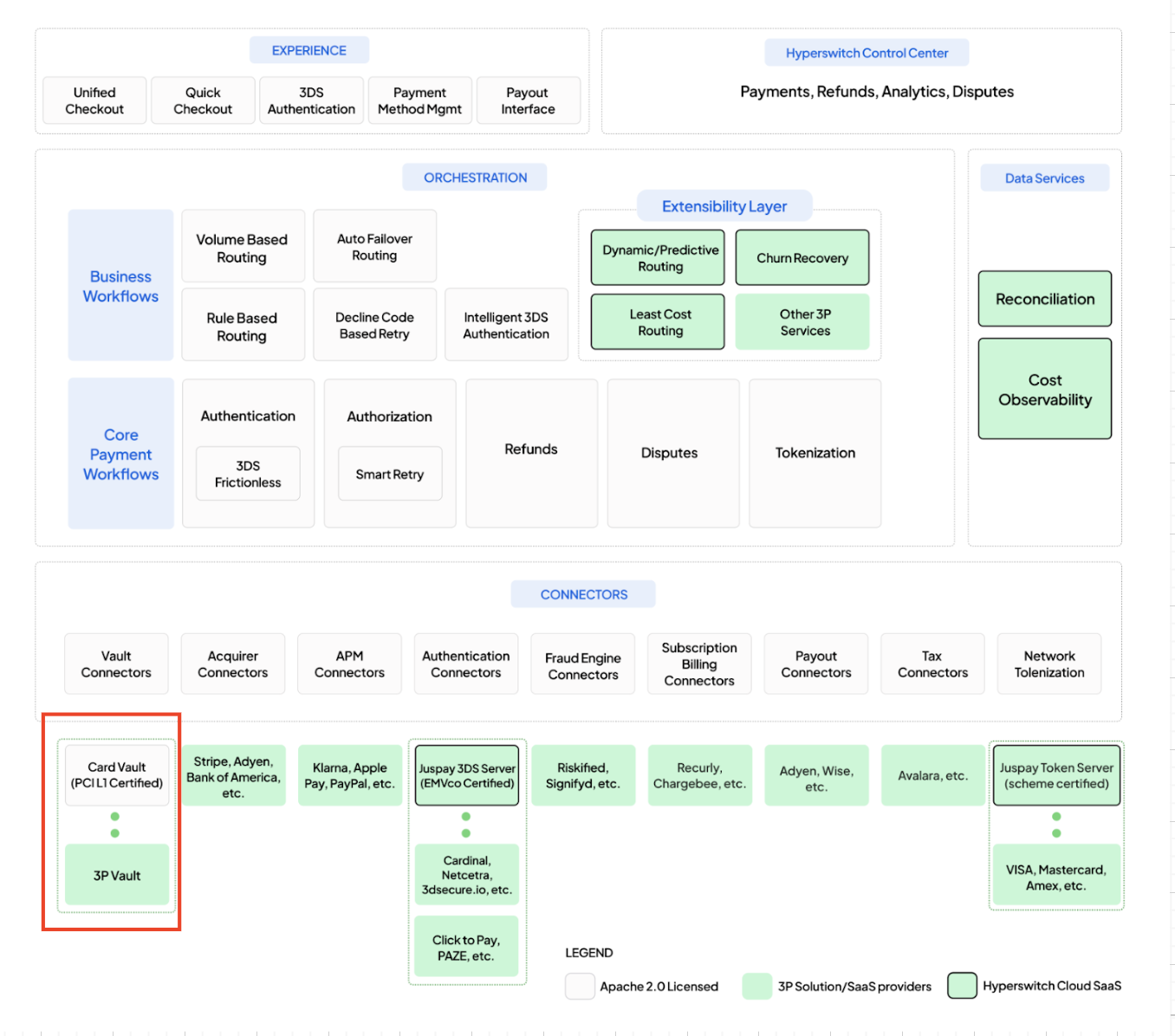
Modular Vaulting Options
OrchestratorX supports both an integrated vault as well as external vaults for merchants using OrchestratorX as their payments orchestration solution in both self-hosted and OrchestratorX-hosted deployment modes.
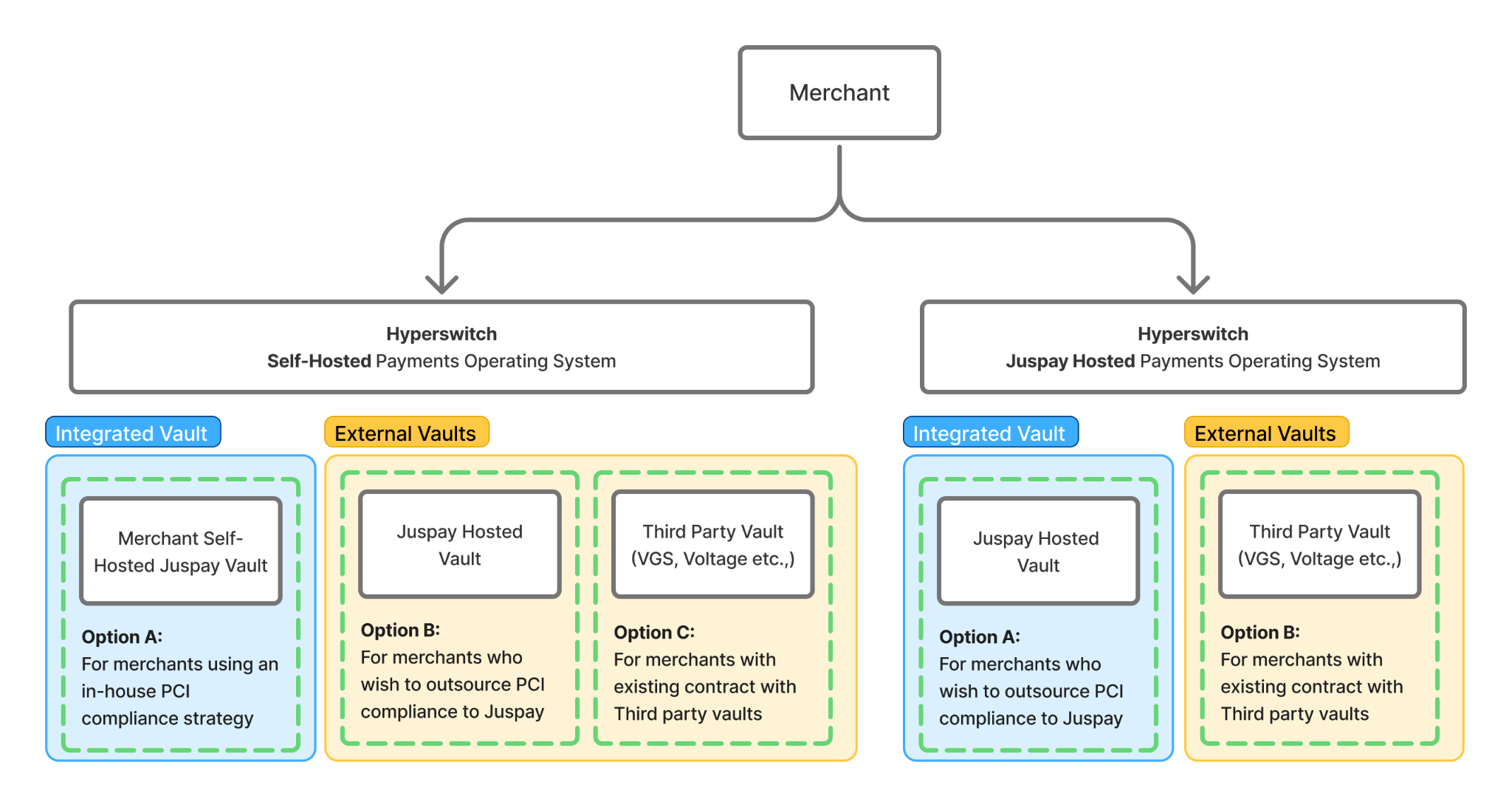
Integrated Vault
OrchestratorX's Payments Orchestration comes bundled with an integrated vault in both Merchant Self-Hosted as well as OrchestratorX Hosted versions. In both cases, merchants don't need to enable any additional configurations to use the Vault. It addresses PCI Compliance challenges, Integration Complexities and Data Migration Challenges.
External Vault
OrchestratorX's Modular Payments architecture enables merchants to connect to external vault. This external vault could either be:
- OrchestratorX Hosted Vault + SDK as a standalone solution
- Third party vaults such as VGS, TokenEx, Voltage, Hashicorp, etc. in case of both SaaS and Self-deployed orchestration
OrchestratorX Hosted Vault
Merchants can outsource their PCI compliance to OrchestratorX by opting to use OrchestratorX's Hosted Vault + SDK as a standalone solution.
Third Party Vault
Through OrchestratorX, Merchants can add external vault providers such as VGS, HashiCorp, and Voltage, leveraging their SDKs to collect and tokenize cards. This ensures flexibility in vault selection while maintaining compliance, security, and seamless token management across multiple payment processors. Additionally, we also support other extended features via an external vault such as:
- Network Tokenization - Merchants can configure Network Tokenization through either OrchestratorX as TSP or use the External Vault as TSP, ensuring flexibility and control over token provisioning
- Proxy Payments through External Vaults - Support for processing payments through Proxy layers to ensure PCI compliance
- Card Forwarding & Receiving - To seamlessly transfer tokenized data across third-party endpoints, enabling effortless PSP migration
SDK Options for Third Party Vault
In case of using External vaults, merchants also have the option to choose which SDK to use to collect payment method details from their customers.
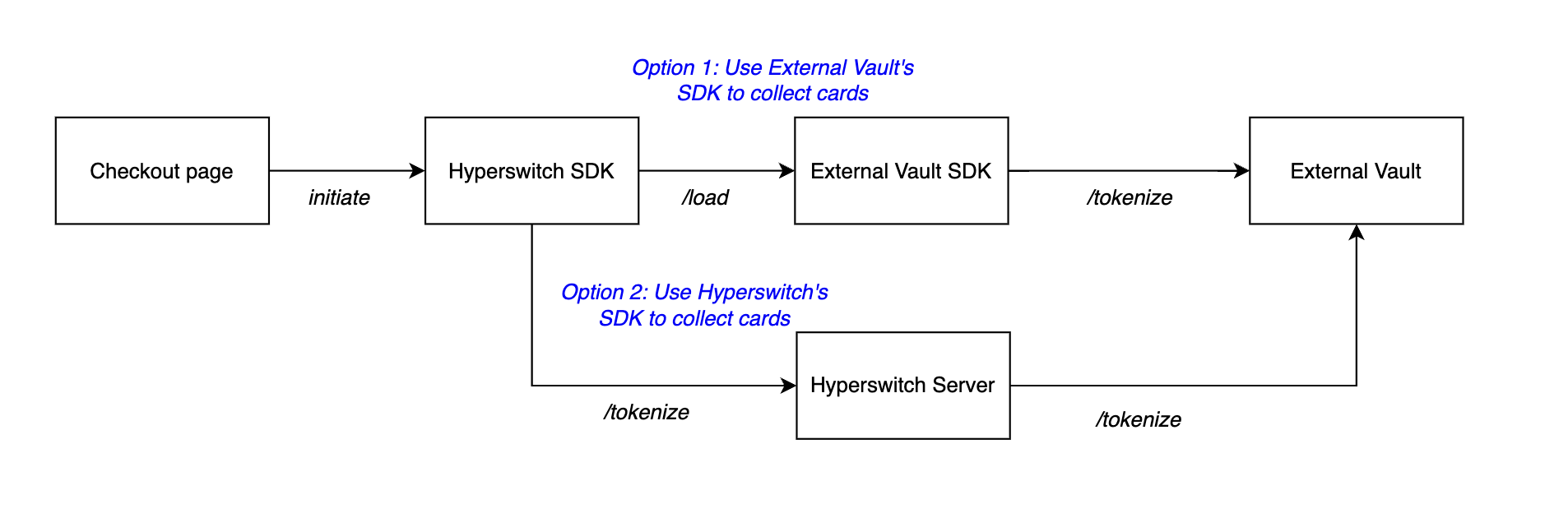
Flexible External Vaulting with Choice of Vault SDK or OrchestratorX SDKs for Card Collection
- OrchestratorX Unified Checkout SDK - Cards are collected via the OrchestratorX Unified Checkout SDK and sent to the OrchestratorX server, which tokenizes them in an external vault. When processing payments, the OrchestratorX server retrieves the raw card details using the vault token and forwards the complete payment request to the PSP.
- External Vault SDK - The External Vault SDK can be loaded on the OrchestratorX Unified Checkout SDK or independently. Cards are captured and tokenized directly in the external vault, bypassing OrchestratorX server. For payments, the OrchestratorX server sends vault tokens via the vault's proxy flow, and the external vault de-tokenizes and forwards the request to the PSP.